Introduction
The legal industry has traditionally been known for its reliance on manual research, extensive documentation, and time-consuming processes. However, Artificial Intelligence (AI) is rapidly transforming how legal professionals work. From law firms and corporate legal departments to courts and compliance teams, AI is improving efficiency, reducing costs, and enabling faster decision-making.
In 2026, AI is no longer just an emerging technology in legal tech—it is becoming a strategic advantage. According to recent industry reports, AI adoption in legal teams has significantly increased as firms look to automate repetitive tasks while allowing lawyers to focus on high-value strategic work.
At True Value Infosoft, we help organizations build AI-powered solutions that automate workflows, improve productivity, and drive digital transformation. The legal industry is one of the strongest examples of where AI can create measurable business impact.
Why AI Matters in Legal Services
Legal professionals handle enormous volumes of documents, contracts, case laws, regulations, and client communications every day. Many of these processes are repetitive and data-heavy, making them ideal for AI-powered automation.
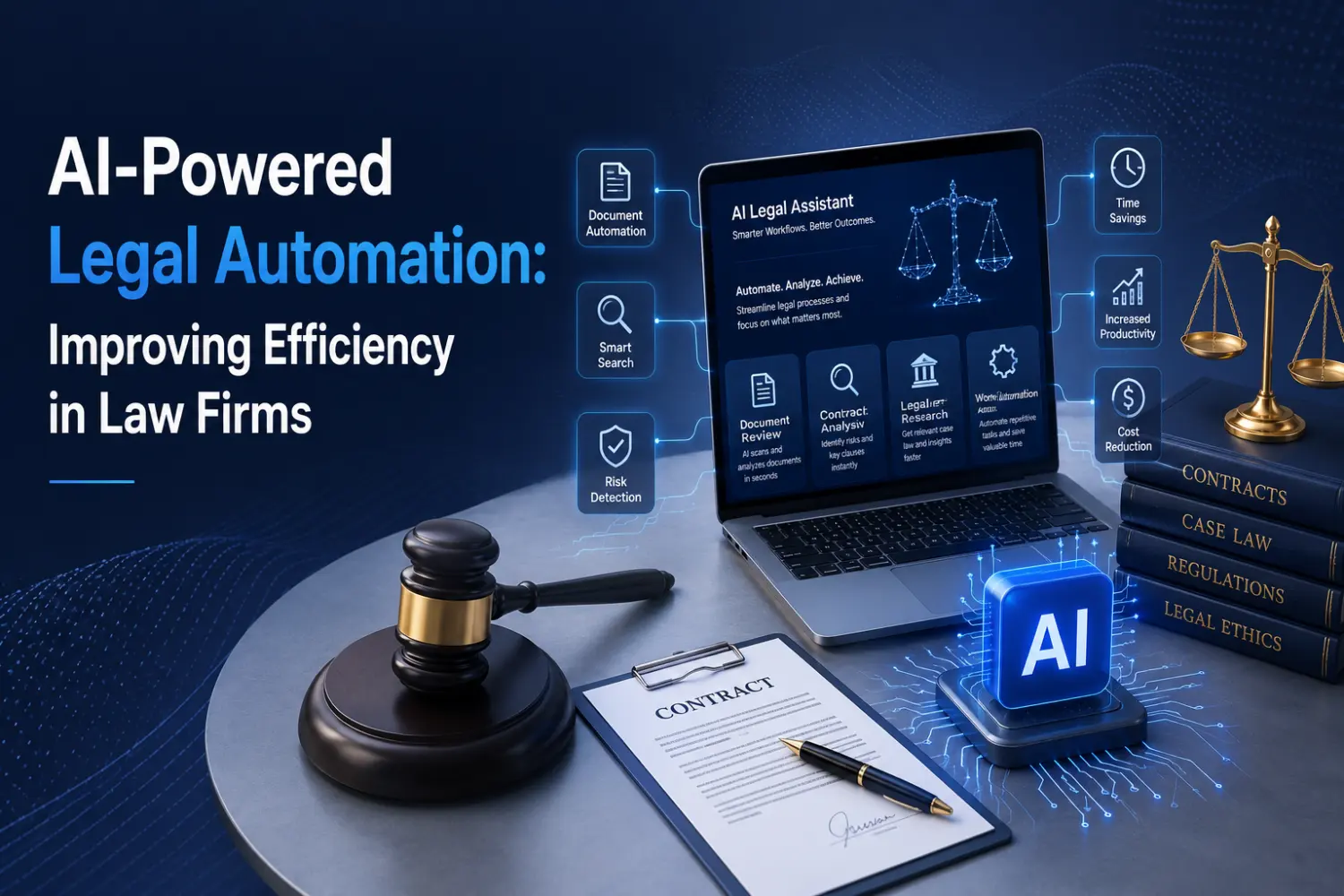
AI helps legal teams by:
- Reducing manual workload
- Improving accuracy in research and document analysis
- Accelerating case preparation
- Lowering operational costs
- Enhancing client service
Instead of replacing lawyers, AI acts as a powerful assistant that handles repetitive tasks while humans focus on strategy, negotiation, and legal judgment.
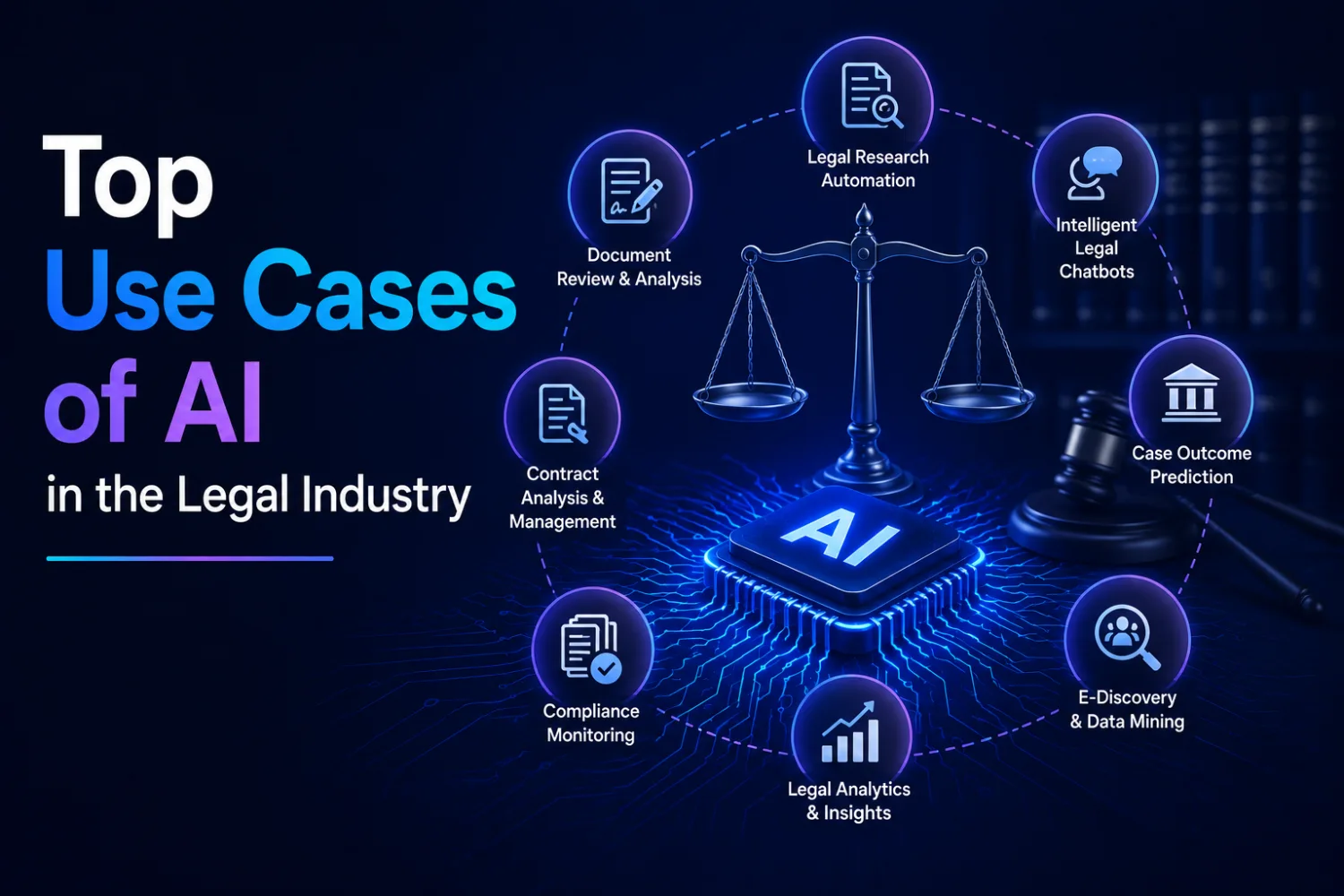
Top Use Cases of AI in the Legal Industry
1. Legal Research Automation
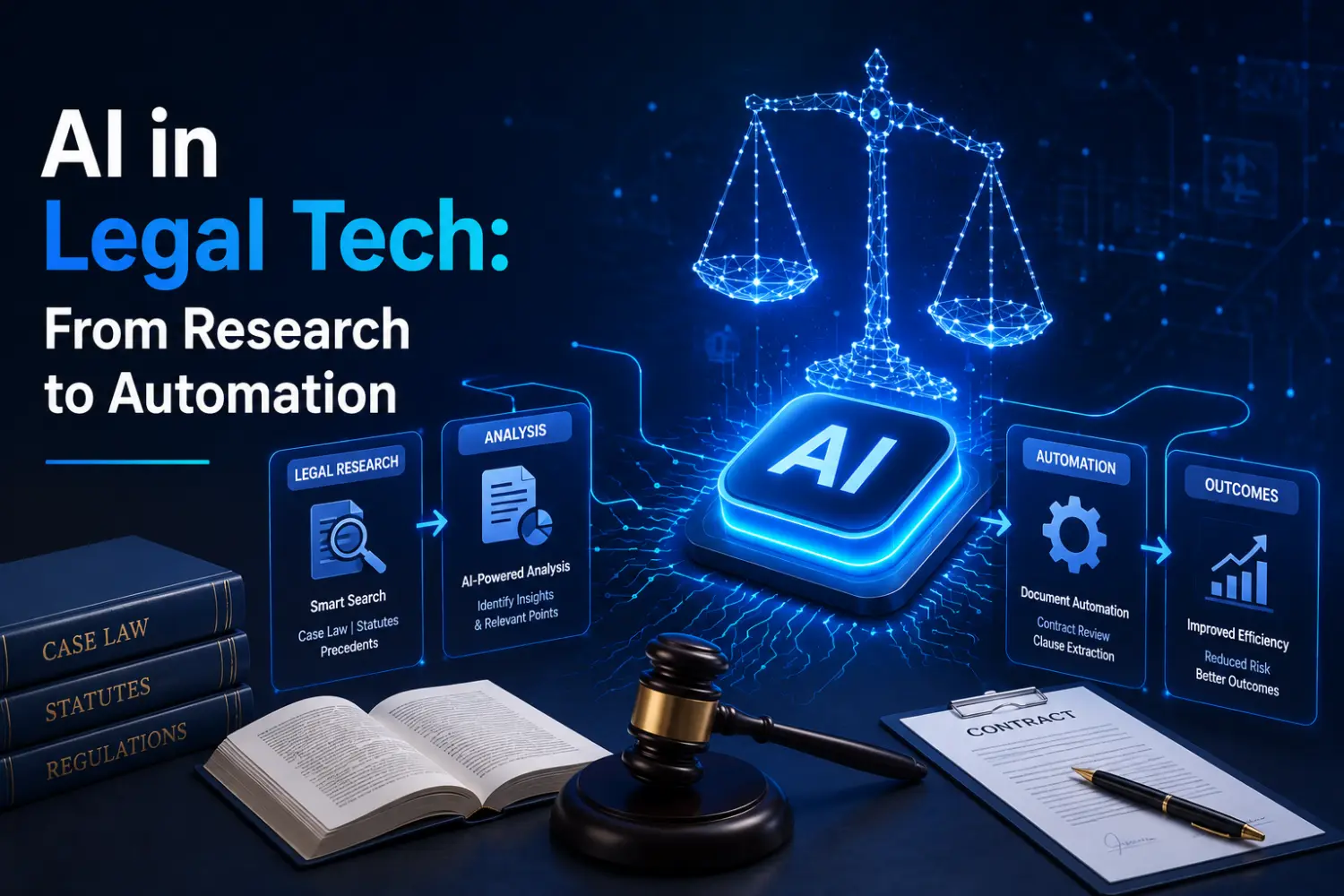
Legal research is one of the most time-consuming tasks for lawyers. Searching through thousands of case laws, judgments, and statutes manually can take hours or even days.
AI-powered research tools can:
- Search legal databases in seconds
- Identify relevant case precedents
- Summarize lengthy judgments
- Highlight important clauses and citations
This allows lawyers to access highly relevant legal information faster and with better precision.
Business Impact:
- Faster case preparation
- Improved research accuracy
- Reduced billable hours spent on repetitive searches
2. Contract Review and Analysis
Contract review involves identifying obligations, risks, deadlines, and compliance issues. Manual contract analysis is slow and prone to human oversight.
AI systems can automatically:
- Detect risky clauses
- Compare contract versions
- Flag missing terms
- Identify unusual obligations
- Suggest revisions
This is especially valuable for enterprises handling large volumes of vendor agreements, employment contracts, and legal documentation.
Business Impact:
- Faster contract processing
- Reduced legal risk
- Improved compliance
3. Document Drafting and Generation
Lawyers frequently draft repetitive legal documents such as:
- NDAs
- Employment agreements
- Lease contracts
- Notices
- Legal letters
AI-powered drafting tools can generate first drafts using templates and contextual data.
Benefits include:
- Faster drafting
- Standardized legal language
- Reduced human effort
- Fewer formatting errors
Lawyers can then review and customize the final document rather than starting from scratch.
4. Due Diligence in Mergers & Acquisitions
M&A due diligence requires reviewing massive volumes of financial and legal records.
AI helps by:
- Extracting key data from documents
- Identifying liabilities
- Detecting anomalies
- Highlighting compliance concerns
This significantly reduces time spent during acquisition or investment analysis.
Business Impact:
- Faster deal closure
- Better risk visibility
- Reduced review costs
5. Litigation Prediction and Case Analysis
One of the most advanced AI use cases is predictive analytics for litigation.
AI models can analyze historical case data to estimate:
- Probability of winning a case
- Likely settlement ranges
- Judge behavior patterns
- Case timelines
This helps law firms build stronger litigation strategies and advise clients more effectively.
Business Impact:
- Better decision-making
- Smarter legal strategy
- More accurate risk assessment
6. E-Discovery
During litigation, lawyers often need to examine huge amounts of emails, files, and digital evidence.
AI-powered e-discovery tools can:
- Search millions of records
- Categorize documents
- Detect relevant evidence
- Remove duplicate files
- Identify suspicious communication patterns
Without AI, this process can become extremely expensive and slow.
Business Impact:
- Reduced discovery time
- Lower legal costs
- Improved evidence analysis
7. Compliance Monitoring
Regulatory compliance is critical in industries like finance, healthcare, and government.
AI can continuously monitor:
- Policy changes
- Regulatory updates
- Internal processes
- Risk exposure
When violations or anomalies are detected, AI can trigger alerts in real time.
Business Impact:
- Lower compliance risk
- Faster issue detection
- Reduced penalties
8. AI-Powered Legal Chatbots
Clients often ask repetitive questions related to:
- Legal procedures
- Documentation
- Timelines
- Fees
- Compliance requirements
AI chatbots can provide instant responses 24/7.
Use cases include:
- Client intake
- FAQ handling
- Appointment booking
- Basic legal guidance
This improves client experience while reducing workload for legal teams.
Business Impact:
- Better client engagement
- Faster support
- Reduced operational cost
9. Invoice and Billing Automation
Legal billing can be complex due to billable hours, retainers, and service-based charging.
AI helps by:
- Tracking billable activities
- Detecting billing anomalies
- Automating invoice generation
- Improving revenue forecasting
This reduces administrative overhead and improves financial transparency.
10. Knowledge Management and Internal Search
Large law firms generate enormous internal knowledge over time.
AI can organize and retrieve:
- Past case documents
- Legal templates
- Internal memos
- Best practices
- Previous legal opinions
This creates an intelligent internal knowledge base that improves productivity across teams.
Challenges of AI in Legal Industry
Despite its benefits, AI adoption in legal services comes with important challenges.
These include:
- Data privacy concerns
- Confidential client information
- AI hallucinations (incorrect output)
- Regulatory compliance
- Ethical considerations
Recent legal industry discussions have emphasized that AI must always operate with human oversight, especially in high-stakes legal decisions. AI should support lawyers—not replace professional judgment.
The Future of AI in Legal Tech
The future of legal services will be powered by AI, automation, and intelligent workflows.
We are already seeing the rise of:
- Generative AI for legal drafting
- AI agents for workflow automation
- Predictive legal analytics
- Smart compliance systems
- Personalized legal assistance
Law firms that embrace AI today will gain a major competitive advantage tomorrow.
How True Value Infosoft Can Help
At True Value Infosoft we build custom AI and automation solutions tailored to business needs. For legal organizations, we can develop:
- AI-powered legal research tools
- Contract intelligence platforms
- Legal chatbots
- Document automation systems
- Generative AI assistants
Our expertise in AI/ML, Generative AI, Automation, and Enterprise Software Development helps businesses transform traditional workflows into intelligent systems.
Conclusion
AI is redefining the legal industry by making legal work faster, smarter, and more efficient. From contract analysis and legal research to compliance and litigation support, AI delivers real value across the legal ecosystem.
Organizations that adopt AI-driven legal solutions can reduce costs, improve productivity, and deliver better client outcomes.
The question is no longer whether AI will transform legal services—it already is. The real question is: Is your legal organization ready for the future?