Introduction
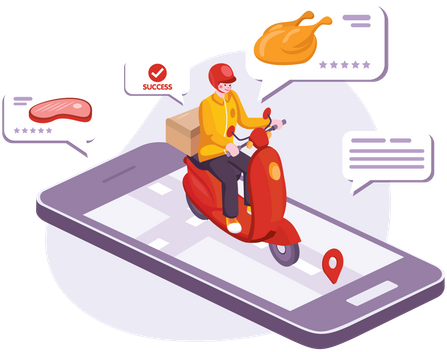
The food delivery industry has experienced exponential growth in recent years, driven by technological advancements and changing consumer behaviors. The convenience of ordering food through a mobile application has become an integral part of modern life, offering entrepreneurs a lucrative opportunity to enter this dynamic market.
Building a food delivery app requires a well-planned approach to ensure seamless ordering, real-time tracking, and secure payments. From defining your app's objectives and choosing the right technology stack to integrating AI-driven recommendations and optimizing the user experience, every step plays a crucial role in success.
Partnering with a reliable IT company like True Value Infosoft, one of the best in India, ensures high-quality development with innovative features. With over a decade of expertise in mobile app development, True Value Infosoft provides cutting-edge solutions to create scalable, user-friendly, and profitable food delivery applications tailored to business needs.
Market Analysis
Understanding the current landscape is crucial before building a food delivery app. The global online food delivery market is projected to reach $96.5 billion by 2027, with a CAGR of 8.9% from 2022 to 2027.
01 Current Trends
The market growth is fueled by urbanization, increased smartphone penetration, and a preference for convenience. Contactless delivery and subscription models are also gaining strong traction.
02 Key Players
The market is dominated by DoorDash, Uber Eats, and Grubhub. However, there remains ample opportunity for niche markets and regional platforms that cater to specific demographics.
03 Target Audience
Identify your audience by demographics (age, income, occupation), geographics (urban vs. suburban), and behavioral aspects (ordering habits, cuisine preferences, spending patterns).
Monetization Strategies
Implementing effective monetization strategies ensures the sustainability and profitability of your food delivery app:
01 Commission-Based
Charging restaurants a percentage of each order is a common approach. This incentivizes the platform to drive more orders to partner establishments.
02 Delivery Fees
Customers are charged a fee for delivery services — a flat rate or variable fee based on distance, order value, or peak demand hours.
03 Subscription Services
Monthly passes offering free delivery or discounts encourage customer loyalty and provide a steady, predictable revenue stream for the business.
04 In-App Advertising
Restaurants pay for premium placement — featured listings or banner ads — increasing their visibility to users browsing the platform.
Essential Features
Developing a robust set of features tailored to each user group is critical for the app's success:
Customer App Features
User Registration & Profile
Easy sign-up and profile customization for personalized ordering experiences.
Restaurant Search & Filtering
Advanced search with filters for cuisine type, ratings, delivery time, and distance.
Order & Payment
Seamless ordering with multiple payment options — cards, digital wallets, and cash on delivery.
Real-Time Order Tracking
Live updates on order status and delivery progress via GPS map integration.
Ratings & Reviews
Allow users to rate and review restaurants and delivery experiences for quality control.
Push Notifications
Alerts for order confirmations, promotions, and real-time delivery status updates.
Restaurant & Driver App Features
Order Management
Restaurants can receive, confirm, and track orders efficiently in real time.
Menu Management
Update menu items, prices, and availability in real-time with ease.
Analytics & Reporting
Insights into order volumes, customer preferences, and revenue for restaurant owners.
Driver Order Assignment
Delivery drivers can accept/decline requests and navigate to destinations with GPS.
Earnings Monitoring
Drivers can track earnings, tips, and delivery history in one dashboard.
In-App Communication
Contact customers or support directly within the app for seamless coordination.
Technology Stack
Step-by-Step Development Process
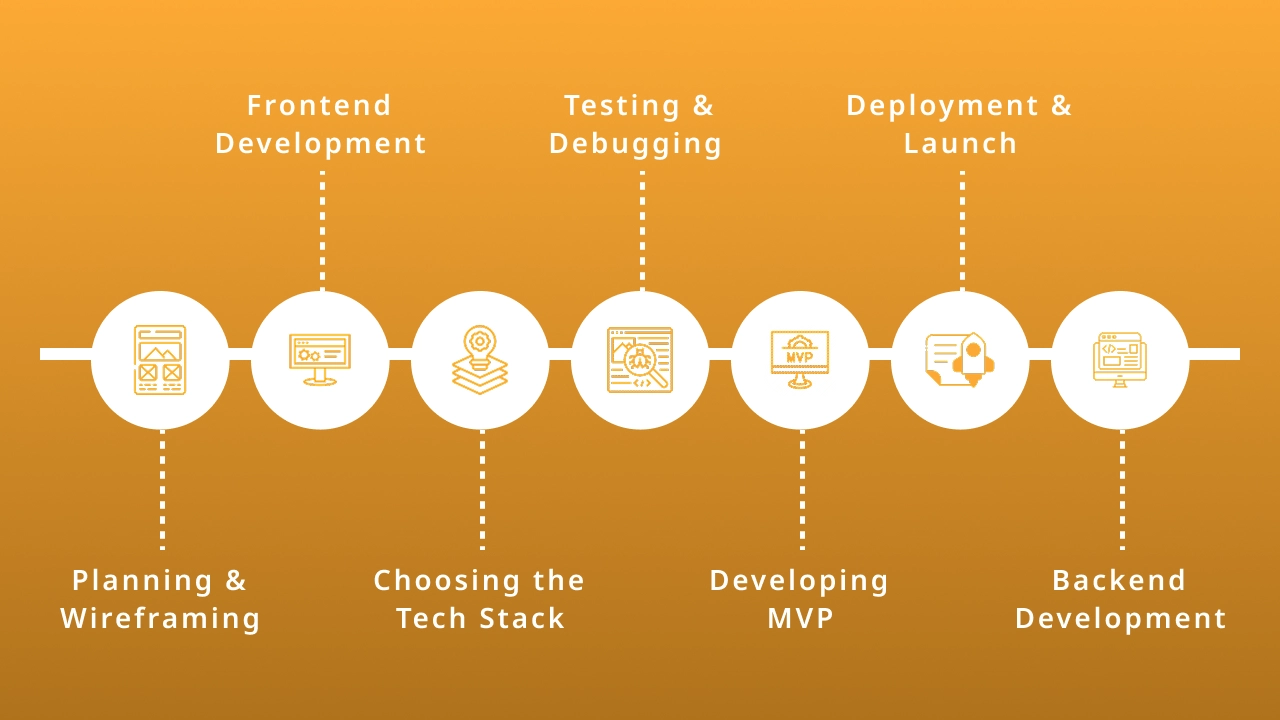
Planning and Wireframing
Define the app's scope, user journey, and features. Create wireframes and UI/UX designs for all screens using Figma or Adobe XD.
Choosing the Tech Stack
Select appropriate technologies — React Native or Flutter for frontend, Node.js for backend, PostgreSQL/Firebase for database, Google Maps API for GPS.
Developing the MVP
Build a Minimum Viable Product with core features: user registration, restaurant listing, menu display, payment processing, order tracking, and reviews.
Backend Development
Set up secure authentication (OAuth, JWT), create database schemas, develop APIs, and implement real-time tracking with WebSockets or Firebase.
Frontend Development
Design an intuitive UI with user-friendly navigation, accessibility features, and responsive layouts optimized for both iOS and Android.
Testing & Debugging
Conduct unit testing, integration testing, and load testing. Use real-world scenarios to ensure a seamless user experience across all devices.
Deployment & Launch
Deploy on Google Play Store and Apple App Store. Set up cloud hosting, database management, and optimize for SEO and app store visibility.
Ready to Build Your Food Delivery App?
True Value Infosoft delivers scalable, feature-rich food delivery solutions tailored to your business goals.
Get Started TodayPost-Launch Strategies
Launching is just the beginning. Here's how to grow and scale your food delivery app after launch:
SEO & ASO Optimization
Optimize content for search engines and app stores to improve organic discovery and downloads.
Social Media Campaigns
Run targeted ads on Facebook, Instagram, and Twitter to reach your ideal customer demographic.
Influencer & Referral Marketing
Partner with influencers and introduce referral programs to grow your user base organically.
Continuous Improvement
Gather user feedback, implement feature updates, and monitor analytics to improve engagement.
Scaling & Expansion
Introduce AI-driven recommendations, subscription models, and expand to new cities and regions.
Partner Expansion
Expand partnerships with more restaurants, cloud kitchens, and delivery agents to grow supply.
Frequently Asked Questions
A successful food delivery app needs: user registration & profile management, restaurant listing & menu browsing, order placement & real-time tracking, secure payment gateways, delivery partner interface, push notifications, ratings & reviews, and an admin dashboard for managing orders and restaurants.
A basic food delivery app costs between $10,000 to $50,000. A full-featured platform like Uber Eats may cost $100,000+. Cost depends on features, design, tech stack (native vs. cross-platform), development team, and ongoing maintenance requirements.
Recommended stack: React Native/Flutter (frontend), Node.js/Django (backend), PostgreSQL/MongoDB/Firebase (database), Stripe/Razorpay (payments), Google Maps API/Mapbox (geolocation). The right choice depends on your budget, scalability, and performance requirements.
Revenue streams include: commission from restaurants (% per order), delivery fees (distance or value-based), subscription plans (premium memberships for free deliveries), in-app advertising (featured restaurant listings), and surge pricing during peak hours.
Basic MVP (Minimum Viable Product): 3–6 months. Full-featured app with advanced functionalities: 6–12 months. To speed up development, consider pre-built templates, no-code platforms, or hiring an experienced development team like True Value Infosoft.
Conclusion
Launch Your Food Delivery App with True Value Infosoft
Building a food delivery app requires strategic planning, technical expertise, and continuous iteration. By following the steps outlined in this guide, you can create a successful and scalable food delivery app that meets market demands and user expectations.
Whether you're a startup or an established business, True Value Infosoft provides end-to-end development expertise — from UI/UX design to deployment — ensuring your app stands out in this competitive market.
Start Your Project