Introduction
The education sector is rapidly evolving as technology reshapes how learning is delivered and managed. Among the most impactful innovations is the Internet of Things (IoT). While IoT is often associated with smart homes or industrial automation, it is now playing a major role in enterprise-level education and corporate training environments.
Organizations, universities, and training institutions are increasingly using IoT-enabled devices to improve learning outcomes, monitor infrastructure, and optimize operational efficiency.
For enterprises investing in digital transformation, understanding the financial impact, potential risks, and implementation roadmap of IoT in education is critical.
What Is IoT in Education?
IoT in education refers to the integration of connected devices, sensors, and smart technologies within educational environments to collect data, automate processes, and enhance learning experiences.
These devices communicate through networks and provide real-time insights that help organizations improve both teaching methods and operational management.
Examples of IoT applications in education include:
- Smart classrooms with connected devices
- Attendance monitoring through RFID or biometrics
- IoT-enabled learning analytics systems
- Smart campus infrastructure management
- Asset tracking for educational equipment
For enterprises providing training programs or managing educational institutions, IoT offers powerful tools for improving efficiency and engagement.
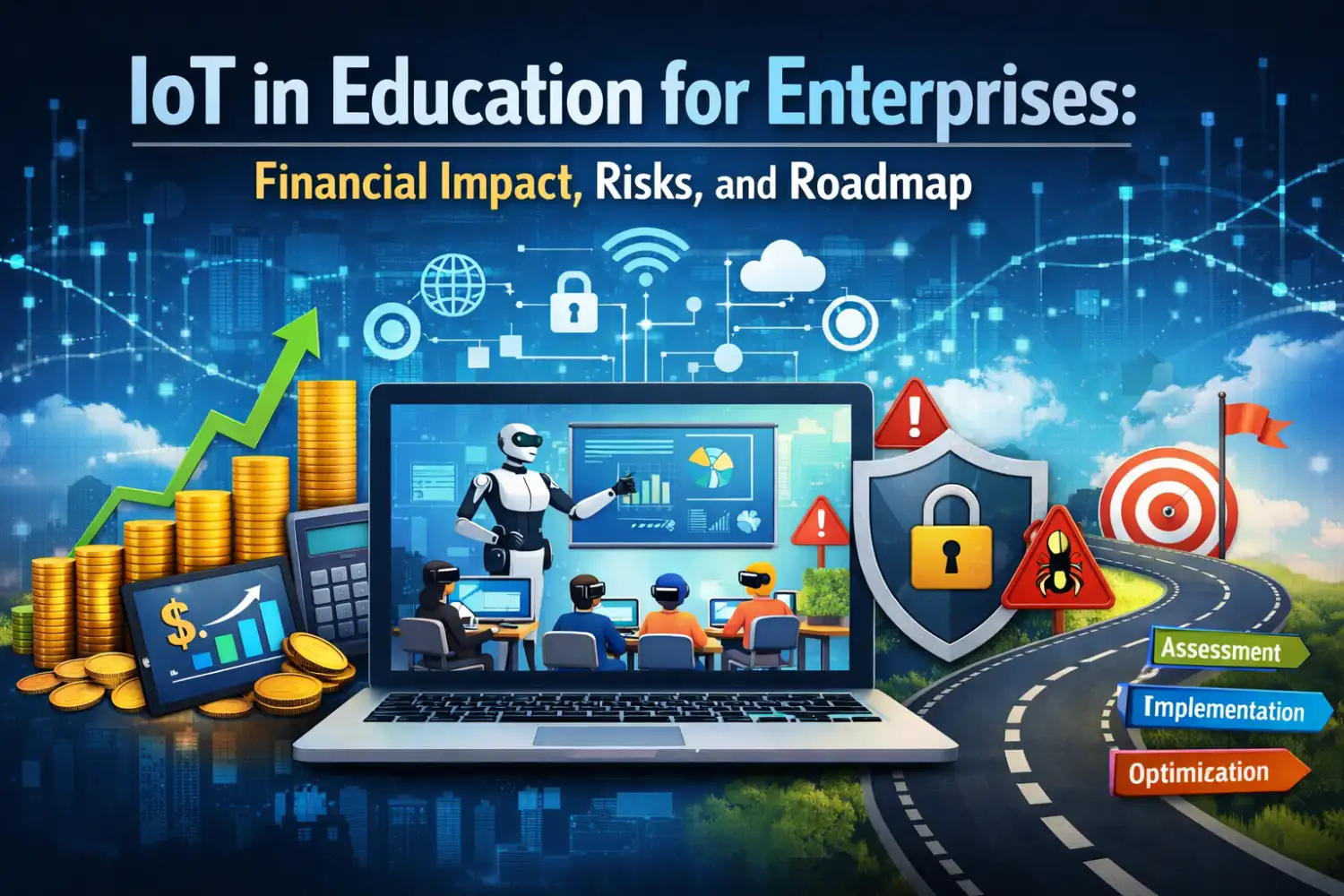
Financial Impact of IoT in Education
Implementing IoT technology requires investment, but it can also generate significant financial benefits over time.
Reduced Operational Costs
IoT systems can monitor energy consumption, lighting, and equipment usage across campuses or training facilities. This helps organizations reduce electricity bills and optimize resource usage.
For example, smart lighting and HVAC systems automatically adjust based on occupancy, reducing unnecessary energy consumption.
Improved Resource Utilization
IoT sensors help track the usage of classrooms, equipment, and training facilities. Enterprises can analyze this data to allocate resources more efficiently.
This prevents underutilized infrastructure and improves return on investment.
Enhanced Learning Productivity
IoT-powered learning environments can provide real-time feedback, performance analytics, and personalized learning insights.
This helps organizations improve the effectiveness of training programs, leading to better employee productivity and skill development.
Data-Driven Decision Making
IoT devices generate large volumes of valuable data that organizations can analyze to make smarter decisions about curriculum design, facility management, and operational strategies.
This data-driven approach improves long-term financial planning.
Key Risks of IoT in Education
While IoT offers significant benefits, enterprises must also address several potential risks.
Data Security and Privacy
Connected devices collect sensitive data such as student information, employee performance metrics, and behavioral patterns.
Without proper security measures, this data could be vulnerable to cyberattacks or unauthorized access.
Organizations must implement strong encryption, authentication, and cybersecurity protocols.
Infrastructure Complexity
IoT systems require reliable networks, cloud infrastructure, and integration with existing software systems.
Poor integration can lead to technical issues and operational disruptions.
Enterprises must carefully design their IoT architecture before implementation.
High Initial Investment
The deployment of IoT devices, sensors, and analytics platforms requires upfront investment.
However, long-term savings and efficiency improvements often outweigh these initial costs.
Device Management Challenges
Large-scale IoT deployments may involve hundreds or thousands of connected devices.
Enterprises must maintain systems for device monitoring, updates, and maintenance to ensure consistent performance.
IoT Use Cases in Enterprise Education
IoT is transforming educational environments in several ways.
Smart Classrooms
IoT-enabled classrooms use connected devices such as smart boards, sensors, and learning management systems to create interactive learning experiences.
Teachers and trainers can monitor engagement levels and adjust teaching methods accordingly.
Smart Attendance Systems
IoT devices such as RFID cards, facial recognition, or biometric scanners automate attendance tracking.
This reduces administrative workload and ensures accurate attendance records.
Equipment and Asset Tracking
Educational institutions often manage expensive equipment such as computers, lab tools, and multimedia devices.
IoT sensors help track assets in real time, preventing loss and improving asset utilization.
Personalized Learning Experiences
IoT systems can collect data on learner behavior, performance, and engagement.
Using this data, enterprises can create personalized training programs tailored to individual needs.
Roadmap for Implementing IoT in Education
Enterprises looking to adopt IoT in education should follow a structured approach.
Step 1: Define Objectives
Start by identifying specific goals such as improving training efficiency, reducing operational costs, or enhancing learning engagement.
Clear objectives help guide technology decisions.
Step 2: Assess Infrastructure
Evaluate existing network infrastructure, cloud capabilities, and IT systems.
IoT devices require reliable connectivity and scalable data management platforms.
Step 3: Select the Right IoT Solutions
Choose IoT devices, sensors, and platforms that align with your organization's requirements.
Compatibility with existing systems is essential.
Step 4: Implement Security Measures
Security should be integrated from the beginning.
This includes data encryption, access controls, and continuous monitoring for vulnerabilities.
Step 5: Pilot and Scale
Start with a pilot project in a limited environment.
Once the system proves successful, gradually expand the deployment across campuses or training facilities.
The Future of IoT in Education
As technology continues to evolve, IoT will play an even greater role in shaping the future of education.
Emerging innovations include:
- AI-powered learning analytics
- Smart campus ecosystems
- Automated facility management
- Connected virtual and hybrid classrooms
Enterprises that invest in IoT-driven education systems will be better positioned to deliver efficient, data-driven, and engaging learning experiences.
Conclusion
IoT is transforming the education sector by connecting devices, automating operations, and enabling data-driven decision-making.
For enterprises, IoT in education offers opportunities to reduce operational costs, improve learning outcomes, and enhance overall efficiency.
However, successful implementation requires careful planning, strong cybersecurity measures, and a well-defined roadmap.
Organizations that strategically adopt IoT technologies will gain a competitive advantage in delivering modern, scalable, and intelligent education solutions.
FAQs
IoT in education refers to the use of connected devices, sensors, and smart technologies to enhance learning environments and improve operational efficiency. These IoT devices collect real-time data that helps institutions and enterprises manage classrooms, track resources, monitor attendance, and personalize learning experiences.
Enterprises can use IoT-powered education systems to improve corporate training programs, track employee learning progress, optimize resource utilization, and reduce operational costs. IoT also enables data-driven insights that help organizations improve productivity and decision-making.
IoT can reduce energy costs through smart infrastructure, improve equipment utilization through asset tracking, and automate administrative processes such as attendance management. Over time, these efficiencies lead to significant cost savings and a higher return on investment.
The major risks include data security concerns, device management challenges, infrastructure complexity, and high initial implementation costs. Organizations must implement strong cybersecurity measures and proper device management strategies to minimize these risks.
Enterprises should begin by defining clear goals, assessing their existing IT infrastructure, selecting suitable IoT devices and platforms, implementing strong security measures, and starting with pilot projects before scaling across their educational environments.